Founders ask me this more than almost anything else.
Not “how do I look more professional?”
Not even “what should my logo be?”
They ask: how do you sell?
Especially when the product is ready, the work is good, and marketing still feels like one more job stacked on top of everything else.
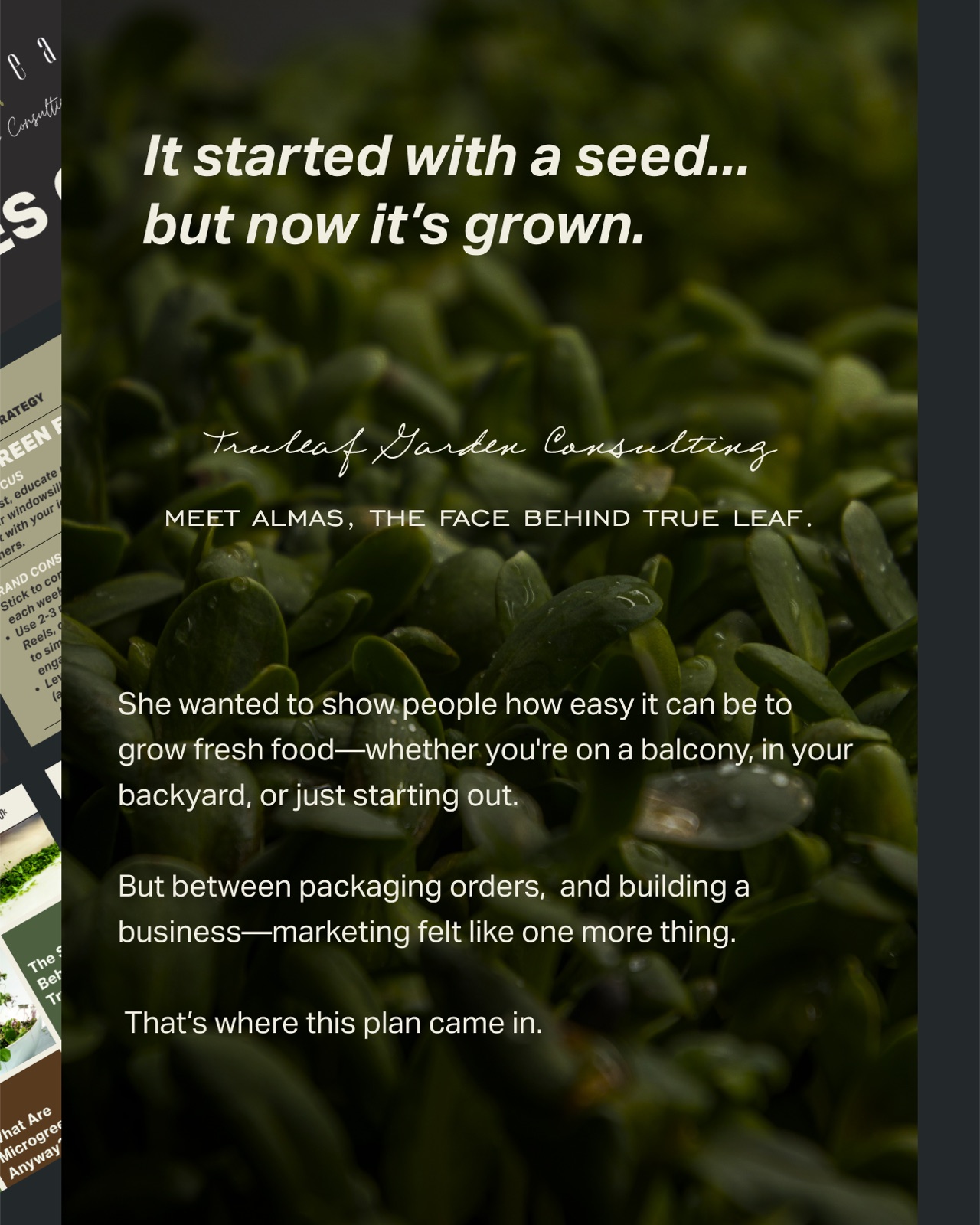
That was the starting point with Almas, the founder of Trueleaf Garden Consulting.
The offer was clear. The selling path was not.
Almas wanted people to see how easy it can be to grow fresh food, whether they had a balcony, a backyard, or were just getting started.
She already had a product worth promoting: microgreen seed kits.
What she did not have was a calm, usable plan for talking about that product week after week. Between packaging orders and building the business, marketing kept getting pushed aside.
So we did not start with a full brand redesign or a new website build.
We started with strategy.
Selling gets easier when the plan gets smaller
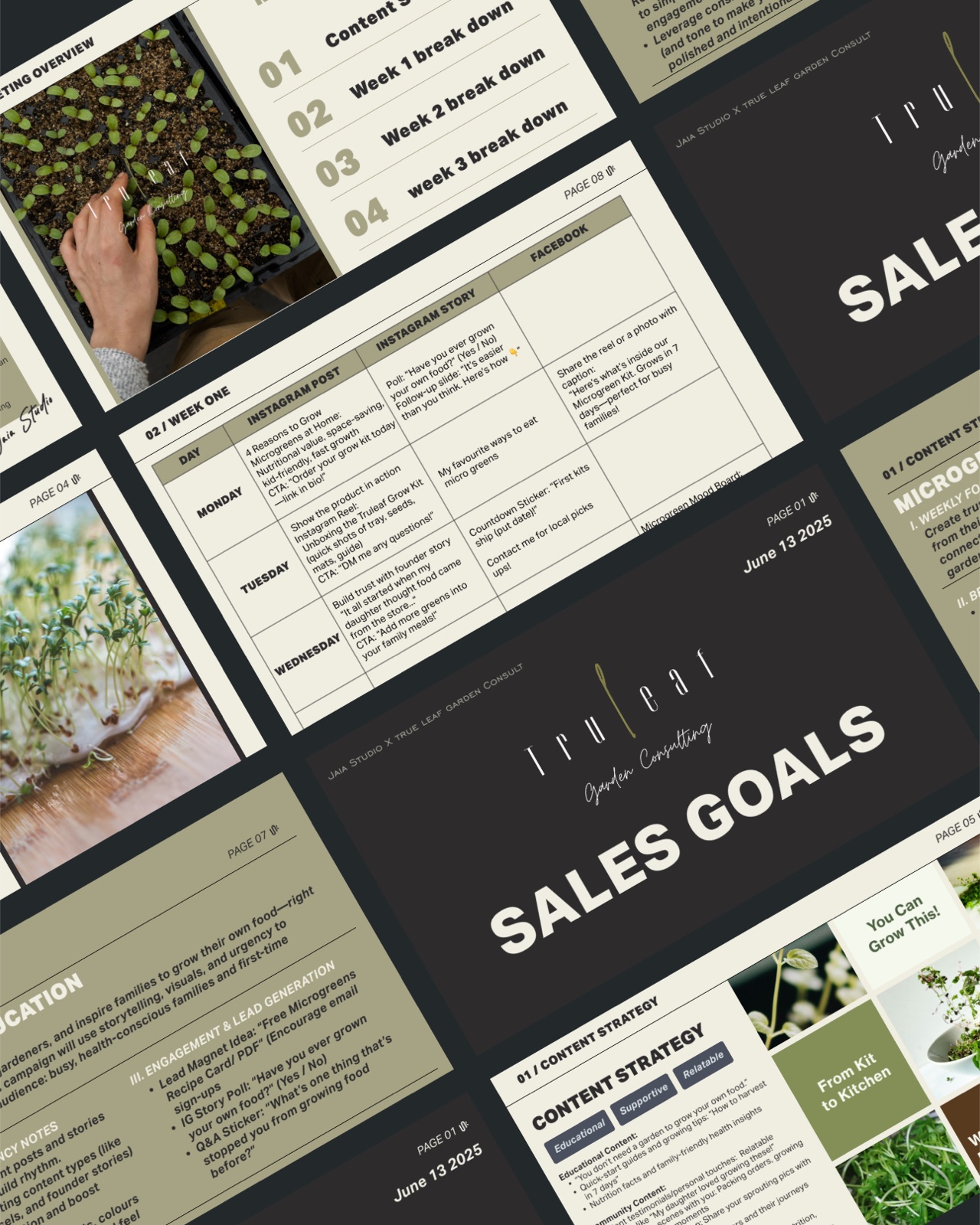
The marketing plan was built to promote the seed kits without asking Almas to become a full-time content creator overnight.
We focused on:
- a clear sales goal
- a 3-week posting calendar
- clear content ideas
- messaging that felt real, warm, and on-brand
- simple ways to build trust and drive orders
- updating the checkout flow on the website
That last piece matters more than people think.
You can post every day and still lose the sale if the path from interest to checkout is confusing. Selling is not only what you say. It is also how easy it is to say yes.
Content that teaches, supports, and feels human
The plan organized content into a few jobs:
Educational content answered the questions people already had. Why grow microgreens at home? How do you start without a big garden? What is actually in the kit?
Supportive content helped people feel capable once they were interested.
Relatable content made the brand feel human: founder story, customer moments, behind-the-scenes, and the everyday reasons someone might hesitate.
Then those ideas became a real calendar. Not a vague “post more.” A week-by-week plan for posts, stories, and shares that could actually be followed.
When selling feels hard, it is often because the founder is improvising every day. A short calendar removes that pressure.
Trust is part of the sale
One of the quiet problems in product businesses is that people like the idea, then stall.
So the plan also included practical trust builders:
- a lead magnet idea, like a free microgreens recipe card, in exchange for an email
- story prompts and polls that surface objections before checkout
- founder storytelling that made the offer feel personal instead of pushy
Selling does not have to sound like a hard pitch.
It can sound like: here is why this helps, here is how it works, here is how to start.
What Almas said about the process
Working with Jen has been such a great experience. She made the entire marketing and content planning process feel clear and easy to follow. What really stood out was how she went above and beyond — not only did she build a solid strategy, but she also helped me put together a detailed 3-week content plan. Her support made a big difference.
— Almas, owner of Trueleaf
That is the point of strategy work like this.
Not a bigger to-do list.
A plan you can actually use.
So… how do you sell?
You get clear on the goal.
You choose a few content jobs that support that goal.
You turn them into a short calendar.
You make the message feel like the brand.
You remove friction from the checkout path.
And you stop treating marketing like something you will figure out after everything else is done.
If your offer is ready but selling still feels scattered, this is usually where to begin. Not with more posts. With a plan that grows with the business.
Explore Strategy Sessions